Making Sense of Water Treatment Options for a Healthier Home
We use water all day without really thinking about it. It’s in the coffee pot before sunrise, running through the shower when everyone is still half asleep, and filling the dishwasher after dinner. Because it’s so familiar, it’s easy to assume that all household water is basically the same.
It isn’t.
Water can contain minerals, sediment, metals, disinfectants, microorganisms, or other substances depending on its source and local conditions. Some issues are obvious, such as stains around a sink or an unpleasant smell. Others aren’t noticeable at all.
That can make choosing a treatment solution feel surprisingly complicated. There are filters, softeners, membranes, carbon systems, whole-home units and more. The answer, though, usually starts with a much simpler question: what’s actually in your water?
Start With the Water You Have
Before looking at equipment, look at the source. A municipal supply has different characteristics from a private well, and local geology can make a noticeable difference too.
Some homes struggle mainly with hardness. Others have sediment, iron, sulfur odors, or an unpleasant taste caused by disinfectants. In some cases, several concerns appear at once.
This is where water quality becomes more than a vague idea. It is a combination of measurable characteristics that can change how water tastes, smells, behaves in plumbing, and interacts with appliances.
Understanding those characteristics gives you a much better foundation for making treatment decisions.
Testing Is Worth the Effort
People often try to diagnose water problems by looking at a glass under the kitchen light. It’s a reasonable first step, but it doesn’t tell the whole story.
Water can look crystal clear while still containing dissolved substances that aren’t visible. On the other hand, visible particles don’t necessarily tell you exactly what those particles are.
A properly selected water test can provide useful information about factors such as hardness, pH, iron, disinfectants, minerals, and microbial concerns, depending on the test being performed.
The point isn’t to collect every possible piece of data just because you can. It’s to gather enough reliable information to understand the problem you’re trying to solve.
Different Problems Need Different Solutions
There’s no universal treatment system that handles every water concern equally well.
A softener, for example, is designed primarily to address hardness. A sediment filter has a different job. Carbon filtration can help with certain tastes and odors, while specialized systems may be required for particular contaminants.
This is why water treatment systems should be selected according to actual water conditions rather than popularity or advertising claims.
The most expensive equipment isn’t automatically the best choice. In fact, a simpler system that targets the correct problem can sometimes outperform a complicated setup that’s poorly matched to the home.
What Water Purification Really Means
The phrase water purification gets used pretty loosely these days. In practical terms, purification refers to processes designed to reduce unwanted substances and improve the suitability of water for a particular use.
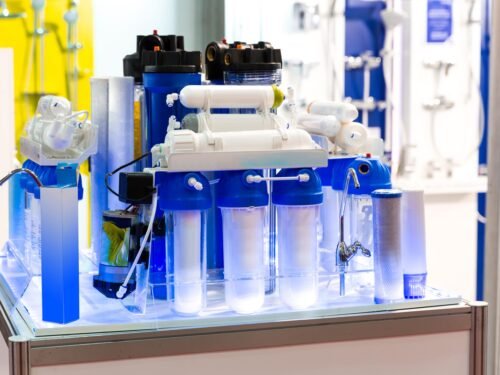
Depending on the technology, that might involve physical filtration, activated carbon, membrane processes, ultraviolet treatment, or other methods.
Reverse osmosis is one example of membrane-based treatment. It uses pressure to push water through a semipermeable membrane, reducing many dissolved substances. Activated carbon, meanwhile, is commonly used to improve taste and odor and to reduce certain chemicals.
No single technology does everything. That’s an important detail that often gets lost in product descriptions.
Whole-Home Treatment Isn’t Always Necessary
One of the biggest decisions homeowners face is whether to treat the entire house or just drinking water.
Whole-home treatment makes sense when a water issue affects showers, appliances, laundry, bathroom fixtures, and other parts of the home. Treating water as it enters the property can provide a consistent supply throughout the plumbing system.
But suppose your biggest complaint is the taste of drinking water. In that situation, a point-of-use system at the kitchen sink may be more practical.
There’s no prize for treating more water than you actually need to treat.
Don’t Forget About Hard Water
Hard water deserves attention because its effects tend to accumulate slowly.
Calcium and magnesium can form scale inside pipes and appliances. You may notice white deposits around faucets, spots on glassware, or soap that doesn’t seem to rinse quite right.
Over time, scale can affect water heaters and other equipment. A properly selected softener can reduce the minerals responsible for hardness and make routine cleaning easier.
Still, it’s important to confirm that hardness is actually the issue before buying a softener. If the problem is iron, sediment, or something else, the treatment strategy may need to be different.
Private Wells Require Regular Attention
Homes with private wells have another consideration: the water source can change.
Groundwater chemistry may vary with local conditions, seasonal weather, well construction, or other environmental factors. A well that has provided good water for years isn’t necessarily guaranteed to remain unchanged forever.
That doesn’t mean every well owner needs a complicated treatment plant in the basement. It means regular testing and sensible monitoring are worthwhile.
A sudden change in odor, taste, color, or clarity deserves attention, especially if it wasn’t present before.
Maintenance Shouldn’t Be an Afterthought
Installing treatment equipment is only part of the process.
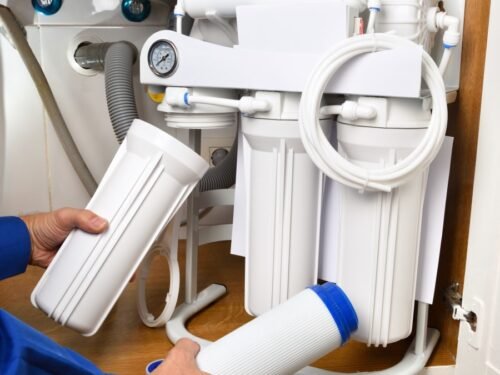
Filters eventually become saturated. Membranes require replacement. Some systems need cleaning, sanitation, media replacement, or periodic adjustments.
Skipping maintenance can gradually reduce performance. Worse, because the decline can happen slowly, homeowners may not realize there’s a problem until the water quality has noticeably changed.
A simple maintenance calendar can make a big difference. Write down filter replacement dates, follow recommended service intervals, and keep an eye on pressure and water appearance.
It’s boring, perhaps. But boring maintenance is often what keeps expensive equipment doing its job.
Think About Efficiency Too
Water treatment isn’t only about removing unwanted substances. It should also fit comfortably into your household.
Consider water usage, available space, maintenance requirements, operating costs, and the number of people in the home.
Some systems require wastewater during operation. Others consume electricity or need regular replacement media. These details matter when you’re thinking about long-term ownership rather than just the installation day.
A treatment system should improve daily life, not become another household chore that nobody wants to deal with.
Don’t Let Marketing Make the Decision
Water treatment advertisements can make the process sound wonderfully easy. Buy this filter, install that unit, and suddenly everything is perfect.
Real water chemistry doesn’t always cooperate.
A thoughtful approach is less flashy but more reliable: identify the source, test when appropriate, understand the actual problem, and then choose technology designed for that specific concern.
If multiple issues exist, a combination of treatment methods may be appropriate. If there’s only one minor concern, a simpler solution could be enough.
Better Water Is About the Right Fit
There’s something satisfying about solving a water problem properly. The shower feels better, dishes come out cleaner, the strange taste disappears, and you stop thinking about what’s happening every time you turn on the faucet.
But getting there doesn’t require guesswork.
Good treatment starts with understanding your water and ends with equipment that matches your needs. Whether the answer is filtration, softening, membrane treatment, disinfection, or a combination, the goal remains the same: practical, dependable water that works for your household.
You don’t necessarily need more treatment. You need the right treatment.
And that small distinction can make all the difference.