Minimalist Interior Design Ideas for Modern Homes
Introduction
Minimalism gets a bad reputation for feeling cold or empty, but done right, minimalist interior design actually feels calm and considered, not bare. I’ve noticed the homes that pull this off well aren’t the ones with the least stuff — they’re the ones where every piece genuinely earns its place.
Start With a Restrained Color Palette
Quick answer: The foundation of good minimalist interior design is a restrained color palette — typically two to three tones total — since too many competing colors immediately undermine the calm, uncluttered feel minimalism aims for.
Quality Over Quantity in Furniture Choices
Fewer, well-made furniture pieces read as far more intentional than many mismatched items. A single well-proportioned sofa beats three smaller, cluttered seating pieces every time.
Hidden Storage Keeps Surfaces Clear
- Built-in wardrobes with flush handles reduce visual clutter significantly
- Closed cabinet storage in the kitchen and living room hides everyday mess
- Under-bed and ottoman storage handle overflow items without visible clutter
Let Negative Space Do Some Work
This is the part people struggle with most — leaving a wall or corner genuinely empty instead of filling it “because it looks unfinished.” Empty space is part of the design, not a gap to fix.
Have you ever felt instantly calmer walking into a room with less in it? That’s negative space doing exactly its job.
Natural Materials Add Warmth Without Clutter
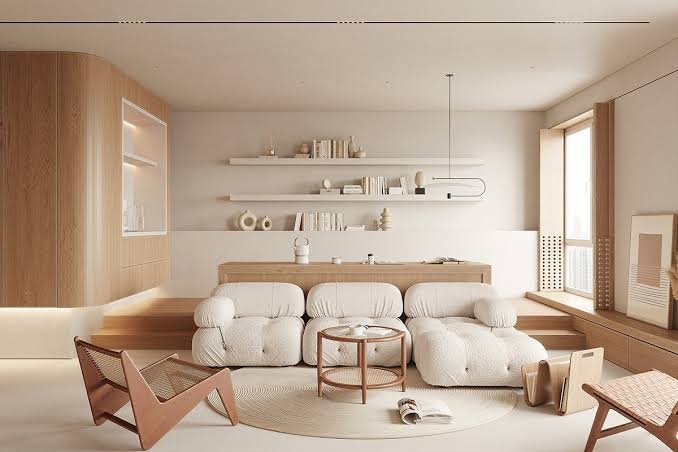
Wood, stone, and linen textures keep a minimalist space from feeling sterile, adding warmth without adding visual noise or extra “stuff.” [link to related guide about modern interior design styles here]
Lighting Should Be Simple but Deliberate
- Choose one or two well-designed light fixtures rather than several decorative ones
- Warm-toned lighting keeps minimalist spaces from feeling clinical
- Avoid overly ornate fixtures that clash with the overall restrained aesthetic
Common Minimalist Design Mistakes
- Going too cold with an all-white, texture-less palette
- Removing personal items entirely, leaving the space feeling impersonal
- Over-styling “minimal” shelves with too many small decorative objects
FAQ
Does minimalist interior design mean having very little furniture? Not necessarily little furniture — it means fewer, better-chosen pieces rather than many mismatched or unnecessary items.
How do I keep a minimalist home from feeling cold? Add natural materials like wood and linen, and warm-toned lighting, both of which add coziness without cluttering the space.
Is minimalist design suitable for small Indian apartments? Yes, it works particularly well in small spaces since it reduces visual clutter and makes rooms feel more open.
Can I add personal items to a minimalist space? Yes, a few carefully chosen personal pieces actually make minimalist spaces feel warmer, as long as they’re not overcrowded.
What’s the most common mistake in minimalist design? Going too stark and cold with an all-white, texture-less approach, which can feel impersonal rather than calm.
Conclusion
Good minimalist interior design isn’t about having as little as possible — it’s about choosing carefully and letting each piece and space genuinely matter. Start by editing down what you already have rather than buying new, and you’ll likely find the calm, considered look comes together faster than expected.