
Rethinking Water Quality: What a Whole-Home Approach Can Really Change
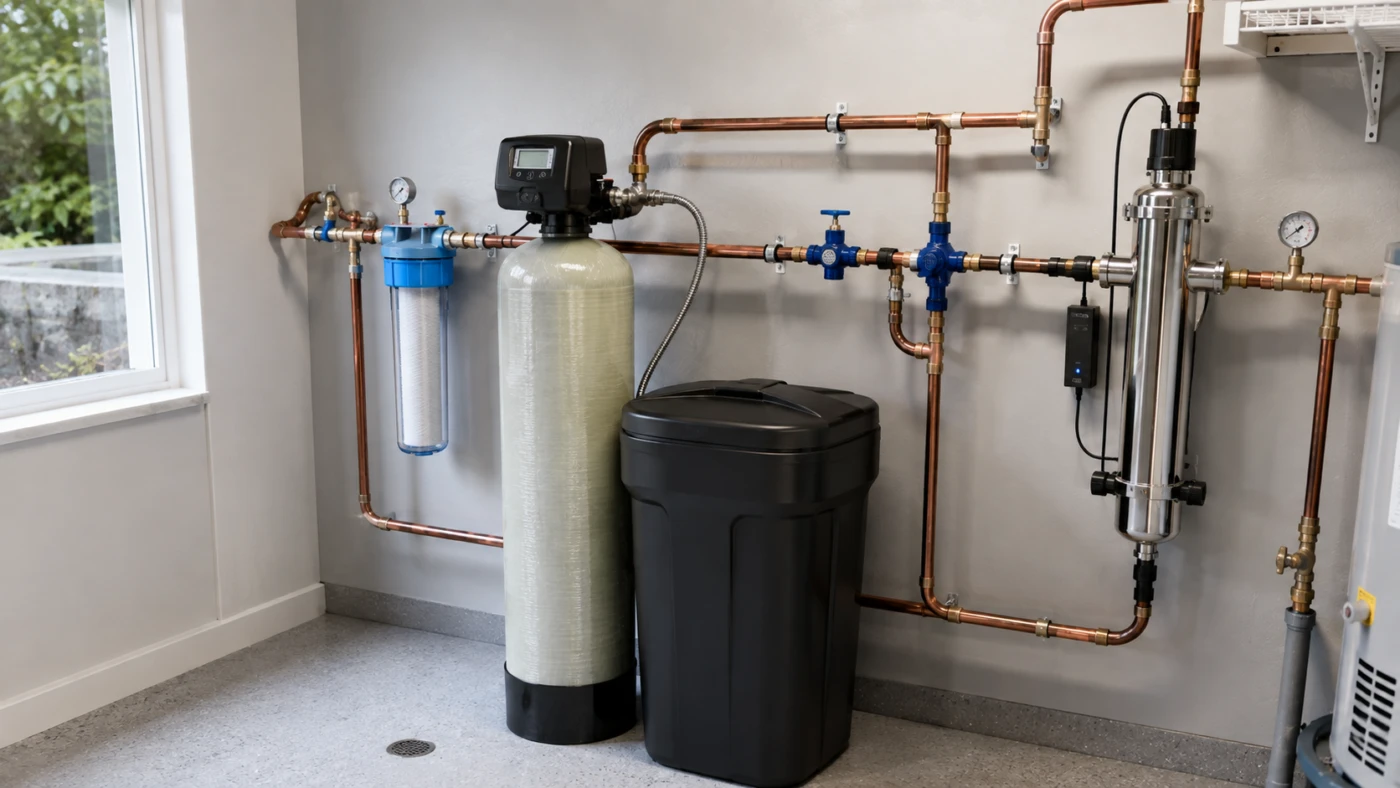
Most people think about water treatment at the kitchen sink. That’s understandable. Drinking water is personal, and if the tap has a strange taste or odor, it’s usually the first place we notice it.
But your home uses water everywhere. It runs through the shower before breakfast, fills the washing machine, feeds the dishwasher, heats up in the water heater, and disappears down countless drains throughout the day. So if there’s an issue with the water coming into your property, treating only one faucet may leave most of the problem untouched.
A broader approach can make sense, particularly when several parts of the house are showing signs of poor water quality.
Look Beyond the Kitchen Faucet
A glass of drinking water can tell you something, but your plumbing can tell you plenty more.
White scale around fixtures may indicate hardness. Sediment can collect in faucet aerators. Staining may point toward minerals such as iron or manganese. Unusual smells can have several causes, from naturally occurring substances to plumbing-related issues.
None of these signs should be treated as a diagnosis on their own. Water testing is still the sensible place to start. Once you understand the characteristics of your incoming water, you can decide whether treating the entire supply is worthwhile.
For households dealing with several recurring concerns, whole-home water treatment can provide a more consistent approach because treatment occurs before water reaches individual fixtures. Instead of solving the problem one faucet at a time, the system addresses the incoming supply more broadly.
Hard Water Can Affect More Than Appearance
Hard water is one of the most common reasons homeowners investigate treatment.
Calcium and magnesium are naturally occurring minerals, and their presence doesn’t automatically make water unsafe. The frustration comes from what those minerals leave behind.
Scale can build up around showerheads, faucets, sinks, and appliances. Soap may not rinse as easily. Dishes can develop spots, while laundry sometimes feels less soft than expected. Inside water heaters and other equipment, mineral deposits can accumulate where they’re difficult to see.
If hardness is significant, reducing it may make everyday cleaning easier and potentially reduce scale-related maintenance. The right system depends on hardness levels, water use, plumbing configuration, and household needs.
Sediment Deserves Attention Too
Sediment isn’t always dramatic. Sometimes it’s barely visible.
Tiny particles may enter a home’s water supply from a private well, aging infrastructure, plumbing work, or other sources. Even when sediment doesn’t make the water look dirty, it can collect in fixtures and potentially interfere with downstream equipment.
A properly selected sediment filter can act as an early line of defense. But filtration isn’t simply a matter of choosing the smallest filter available. Flow rate, filter capacity, particle size, and replacement frequency all matter.
A filter that’s constantly clogged isn’t doing anyone a favor. It may restrict water flow and require much more frequent maintenance than expected.
Different Problems Call for Different Technologies
One reason water treatment feels complicated is that there isn’t a universal piece of equipment that solves everything.
Some filters are designed mainly for sediment. Activated carbon can be useful for certain tastes and odors. Water softeners address hardness in a different way. Reverse osmosis is commonly used for reducing many dissolved substances at the point of use.
This is why good water treatment solutions begin with understanding the water itself. The equipment should follow the diagnosis, not the other way around.
It’s easy to get caught up in product specifications and impressive-sounding claims. A better question is simpler: “What exactly is this system designed to remove or reduce?”
That one question can prevent a surprisingly expensive mistake.
Think About Where Water Is Used
A whole-house approach doesn’t necessarily mean every part of the water supply needs identical treatment.
Drinking and cooking may have different requirements from bathing or laundry. If your main concern is the taste of drinking water, a point-of-use system could be enough. If hardness is affecting showers, appliances, and plumbing throughout the property, treatment at the main supply may be more practical.
Some homes benefit from layered treatment. A sediment filter might protect the system first, followed by hardness treatment, while a dedicated drinking-water system provides additional treatment in the kitchen.
The best setup is usually the one that solves the actual problems without creating a maintenance monster in the process.
Your Water Heater Is Part of the Conversation
Water heaters deserve special attention because they regularly deal with heated water, and heat can encourage mineral scale formation.
Over time, deposits may accumulate inside the tank or on components. This doesn’t mean every water heater exposed to hard water will fail early, but it does explain why homeowners in hard-water areas often pay close attention to scale.
Treating incoming water can be one part of an overall maintenance strategy. Regular inspection and manufacturer-recommended servicing still matter, though. Water treatment isn’t a substitute for maintaining the equipment itself.
Better Water Doesn’t Have to Mean More Equipment
There’s a tendency to assume that if one system is helpful, three must be even better.
Not necessarily.
Every additional component brings installation considerations, replacement parts, maintenance, and operating costs. A complicated system can be worthwhile when the water requires it, but unnecessary equipment adds complexity without necessarily improving results.
This is another reason testing matters. Good information helps you distinguish between genuine treatment needs and things that simply sound useful in a sales brochure.
A professional assessment can also help determine whether existing plumbing or fixtures are contributing to the issue. Sometimes the answer isn’t another filter at all.
Maintenance Is Where Good Intentions Become Results
Water treatment systems need attention. That’s just part of the deal.
Filters have to be replaced. Softening equipment may require salt or other routine care, depending on the technology. Reverse osmosis membranes need periodic replacement. Connections and components should be inspected when recommended.
Ignoring maintenance can gradually reduce performance.
It’s worth keeping a simple calendar or note on your phone. Record filter changes, service visits, unusual water-quality observations, and test results. If something changes later, you’ll have a useful history instead of trying to remember what happened six months ago.
What Does “Healthier Water” Mean at Home?
The phrase healthier water can mean different things to different households.
For one family, it may mean water that tastes better. For another, it could mean reducing a particular contaminant identified through testing. Someone else may care most about removing sediment or addressing hardness throughout the plumbing.
The important point is to avoid treating “healthier” as a vague promise. Water quality should be evaluated according to measurable characteristics and the intended use of the water.
If you’re concerned about drinking-water safety, especially with private wells or a sudden change in water quality, appropriate laboratory testing and professional advice are more useful than simply purchasing a filter and hoping for the best.
A Whole-Home View Can Be Surprisingly Practical
Water treatment doesn’t have to become a complicated home-improvement project.
Start with the source. Understand what’s in the water. Pay attention to symptoms such as scale, sediment, stains, odors, and taste changes. Then decide which problems actually matter to your household.
A whole-home strategy can be especially useful when water-quality concerns appear in several rooms rather than at a single faucet. But the right solution isn’t necessarily the biggest system or the most expensive one.
It’s the system that fits.
When water treatment is planned around real conditions, the benefits can be pleasantly ordinary: cleaner fixtures, more comfortable showers, better-performing appliances, and water that feels more dependable from one end of the house to the other. Sometimes the best home improvements are the ones you stop noticing because everything simply works the way it should.


