Understanding the Different Ways to Improve Water Quality at Home

Water quality is one of those household issues that tends to stay unnoticed until it becomes inconvenient. A glass of tap water tastes a little different. The shower door develops stubborn white spots. Soap doesn’t seem to rinse properly. Maybe the water heater needs attention more often than expected.
None of these things should automatically cause alarm, but they can be signs that the water coming into your home has characteristics worth understanding.
The tricky part is that there isn’t one treatment system that solves every water problem. Hardness, chlorine, sediment, dissolved minerals, and other concerns require different approaches. Choosing wisely starts with figuring out what your water actually needs, rather than buying equipment based on a vague promise of “better water.”
Begin With a Clear Picture of Your Water
Before considering treatment equipment, test the water. This is particularly important for private wells, where mineral content and other characteristics can vary considerably depending on the location and geology.
Municipal water is treated and monitored, but that doesn’t mean every home’s water will taste or behave exactly the same. The condition of household plumbing, the source of the supply, and changes in treatment can all influence what comes out of the tap.
A basic test can reveal useful information about hardness, pH, chlorine, iron, total dissolved solids, and other characteristics. Once you know what’s present, you’re in a much better position to decide whether treatment is necessary and what type might actually help.
Hard Water Can Create Everyday Problems
Hard water contains minerals, primarily calcium and magnesium. These aren’t automatically harmful simply because they’re present, but they can be a real nuisance around the house.
The signs are familiar: mineral spots on glassware, scale around faucets, soap scum in the bathroom, and deposits inside appliances. Water heaters can be especially vulnerable to scale because minerals tend to precipitate more readily when water is heated.
For homes dealing with persistent hardness, water softeners can reduce calcium and magnesium through an ion-exchange process. The result can be less scale, easier cleaning, and better performance from plumbing fixtures and appliances.
However, a softener is not a universal purifier. It addresses hardness specifically, which is why water testing remains important.
Why Reverse Osmosis Is Different
Some homeowners want to improve the quality of their drinking and cooking water beyond what a standard carbon filter provides. That’s where reverse osmosis can become relevant.
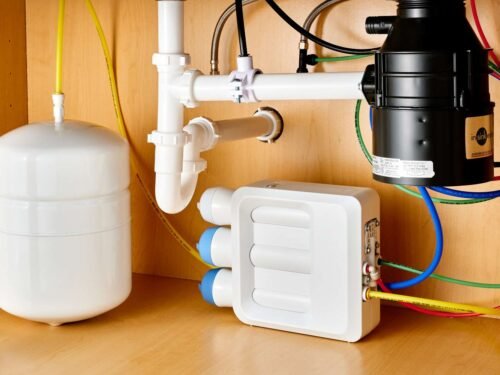
Reverse osmosis uses pressure to push water through a semipermeable membrane. The membrane allows water molecules to pass while reducing many dissolved substances. Because the process is more intensive than basic filtration, RO systems are often installed at a specific drinking-water tap rather than treating every gallon used throughout the home.
One practical consideration is that reverse osmosis systems produce some wastewater during operation, and they require periodic filter and membrane replacement. They’re therefore best selected based on the quality goals of the household rather than simply because the technology sounds advanced.
For someone mainly bothered by chlorine taste, an RO system may be more treatment than necessary. For a household with a specific dissolved-solids concern, it may be worth considering.
Filtration Has Plenty of Uses
Filtration is another broad category. The important thing is understanding what the filter is designed to reduce.
Activated carbon is commonly used to improve taste and reduce chlorine and certain organic compounds. Sediment filters can capture particles such as sand, dirt, and rust. Specialized media can target particular substances such as iron or sulfur-related compounds.
There’s a tendency to think that a filter with more stages must be better. Not necessarily. Every additional component should have a purpose.
A sensible system is one where each stage has a reason for being there. Otherwise, homeowners may end up paying for complexity without getting a meaningful improvement.
When Whole-Home Treatment Makes Sense
Drinking water is only one part of household water use. You also shower in it, wash clothes with it, run dishwashers, fill water heaters, and send it through every fixture in the house.
That’s where whole home water treatment can be useful. Rather than treating water at only one faucet, a whole-home setup can address certain water-quality issues before the water reaches different parts of the property.
This approach may make sense for widespread hardness, sediment, unpleasant odors, or other concerns that affect the entire supply. The system needs to be sized correctly, though. Household flow rate, water pressure, incoming water quality, and daily usage all matter.
A system that looks impressive on paper can still perform poorly if it’s incorrectly sized or installed.
Don’t Confuse Taste With Safety
Taste and safety are related to water quality, but they aren’t the same thing.
Water can taste perfectly fine and still contain a substance that requires attention. Conversely, water can have an unpleasant taste caused by something relatively benign.
That’s why taste alone shouldn’t determine a treatment decision. If there’s a sudden change in smell, color, or taste, investigate it rather than assuming that adding a filter will solve everything.
For private wells, periodic testing is especially important because conditions can change over time. Heavy rainfall, nearby land activity, flooding, or changes in the well itself can potentially affect water quality.
Consider Your Household Habits
Treatment decisions should fit the people actually using the water.
A couple living in a small home may have very different needs from a family of six. Someone who drinks mostly bottled water may prioritize whole-house scale control, while another household might care much more about improving the taste of tap water for cooking and drinking.
Water usage also matters. A treatment system needs enough capacity to keep up with periods of high demand. Peak morning showers, laundry, dishwashing, and other simultaneous uses can put more demand on a system than an average daily estimate suggests.
These practical details are easy to overlook when shopping from a product brochure.
Maintenance Is Part of the Investment
Every treatment system has a maintenance side. Filters need changing. RO membranes eventually need replacement. Softener systems require routine care and, depending on the model, salt or other regeneration supplies.
Ignoring these tasks can gradually reduce system performance.
It helps to keep a simple maintenance schedule. Write down when filters were installed and when they should be replaced. If your system has a service indicator, don’t ignore it for six months just because the water still looks clear.
Clear water isn’t necessarily proof that the equipment is performing exactly as intended.
A Little Research Can Save a Lot of Money
Water treatment doesn’t have to become a complicated home-improvement project. Start by identifying the problem. Test the water where appropriate. Understand what each technology does, and just as importantly, what it doesn’t do.
Then consider installation, operating costs, maintenance, available space, and expected lifespan before making a decision.
The goal isn’t to create the most elaborate setup possible. It’s to create a practical system that fits your water and your household.
Good water treatment is rarely about chasing perfection. It’s about making informed improvements that you’ll actually notice in everyday life — fewer deposits, better taste, cleaner fixtures, and equipment that works the way it should.
Once the right system is in place and properly maintained, water becomes pleasantly boring again. And for something you use every single day, that’s not a bad thing at all.