Why Do You Need an HVAC Company in West Valley City, UT, for Installing a Ductless Mini-Split System?
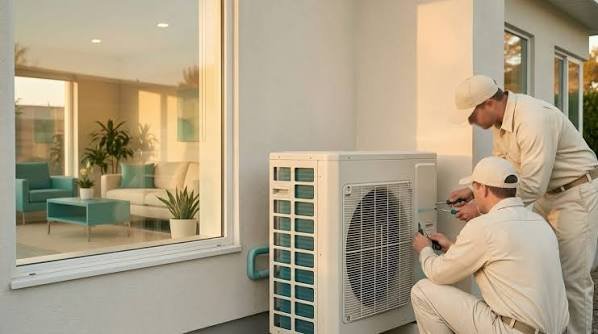
A ductless mini-split is an efficient heating and cooling system that doesn’t require ductwork. Installing an indoor unit and connecting it to an outdoor system is not enough to be considered a proper installation, however.
A professional HVAC company in West Valley City, UT, is responsible for selecting, installing, and connecting all pipes and electrical wiring, draining, and testing the system. Each step has an impact on comfort, efficiency, and equipment longevity.
1. Calculate Heating and Cooling Requirements
The first step is to determine the amount of heating and cooling the space requires.
Technicians take into account variables such as square footage, insulation, window exposure, ceiling height, room layout, air leakage, and local climate. A correct load calculation determines the size of the system and the number of zones.
Proper sizing is vital. An oversized or undersized system will run inefficiently or fail to create a uniform temperature. When comparing models, efficiency ratings matter as well. SEER2 measures cooling efficiency, while HSPF2 measures heating efficiency. Higher ratings mean lower operating costs over time, so these numbers are worth reviewing before committing to any unit.
2. Plan the System Layout
The HVAC company will decide whether the property requires a one-zone or multi-zone system.
Technicians also make decisions about the placement of indoor air handlers and the outdoor unit. There must be adequate clearance and good air movement for the indoor unit, and sufficient space for heat transfer and future service for the outdoor unit. Line set length and the vertical elevation difference between the indoor and outdoor units both factor into placement, as manufacturers specify maximum limits for each.
Snow, ice, and debris are also considerations for placement in Utah.
3. Install the Indoor and Outdoor Units
The indoor unit is firmly attached to an appropriate wall, ceiling, or other acceptable location.
The heat pump or condenser is mounted on a stable pad, stand, or bracket outside. Correct leveling and clearance are essential, as they can impact airflow, drainage, and equipment operation.
An experienced HVAC company in West Valley City, UT, will adhere to the manufacturer’s mounting and clearance instructions rather than a standard approach.
4. Install Refrigerant Lines
Copper refrigerant tubing connects the indoor and outdoor units.
Technicians make a hole in the wall for the wiring, refrigerant lines, and condensate drain. The opening is then properly sealed to minimize air and moisture leakage.
Refrigerant tubing must be connected properly, as incorrect connections can cause leaks or reduce cooling efficiency.
5. Evacuate and Charge the Refrigerant Circuit
Before the unit starts up, technicians will normally check for refrigerant leaks by pressurizing the refrigerant circuit with dry nitrogen.
They then use a vacuum pump to remove air and moisture from the lines. This is crucial because moisture can impact system performance over time and cause damage. Afterwards, the refrigerant charge is adjusted according to the manufacturer’s specifications.
6. Complete Electrical Work
Correct electrical wiring, circuit protection, grounding, and disconnect are required for mini-split systems.
Voltage requirements vary by model. Some systems run on 115 volts, while most residential mini-splits use 208/230 volts.
Before energizing the equipment, the contractor verifies breaker size, conductor size, and electrical requirements. In West Valley City, this scope of electrical work typically requires a permit and a follow-up inspection. A licensed HVAC company will pull the necessary permits and schedule an inspection so the installation meets local code.
7. Set Up Condensate Drainage
During cooling, the indoor unit extracts moisture from the air. This water must drain safely through a condensate line. When gravity drainage is not possible due to unit placement, a condensate pump is installed to move water mechanically to an appropriate drain point.
Proper drainage setup by an HVAC company in West Valley City, UT, minimizes leaks and water damage.
8. Test and Commission the System
After installing the system, the technician powers it on and tests temperatures, airflow, controls, electrical operation, drainage, and system communication.
A local HVAC company in West Valley City, UT, can also explain filter maintenance, warranty registration, and other maintenance needs.
Get Professional Installation Done for Mini-Split Systems
A mini-split is a standalone heating, cooling, electrical, and refrigeration system. With proper sizing, installation, and commissioning, it functions as intended and delivers long-lasting comfort.