Why Your Water May Be Leaving More Than a Few Marks Behind
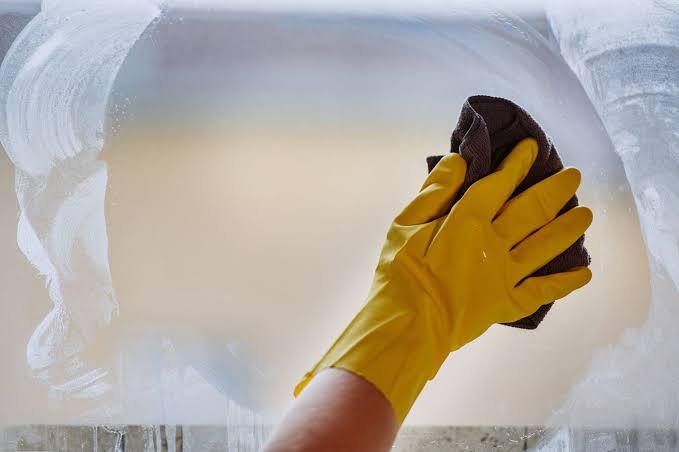
There’s a particular kind of household frustration that seems almost too small to complain about. You clean the shower glass, rinse it, wipe it down and admire the result. A day or two later, there they are again—those cloudy little marks staring back at you.
Then you notice the same thing around the kitchen faucet. The dishes aren’t quite as shiny. Your soap doesn’t seem to lather the way it used to. Maybe your hair feels rough after a shower, too.
None of these signs necessarily points to one single cause. Water chemistry can affect surprisingly ordinary parts of daily life, and hard water is one of the most common reasons homeowners start noticing changes. Understanding what’s happening is the first step toward deciding whether your home actually needs treatment.
Those Marks on the Shower Glass Have a Reason
If you regularly see spots stains on glass, especially around shower doors and faucets, minerals in the water may be leaving deposits behind as droplets evaporate.
Hard water commonly contains calcium and magnesium. When the water dries, those dissolved minerals don’t disappear with it. Instead, they remain on the surface, creating white, cloudy or sometimes slightly crusty marks.
You can clean these deposits with appropriate household products, but cleaning only removes what has already formed. If the same marks keep returning, the source may be the water itself rather than your cleaning routine.
That’s an important distinction. Sometimes the mop, sponge or glass cleaner isn’t the problem.
Hard Water Can Follow You Into the Shower
The bathroom is often where water-quality issues become most obvious because you see the results on glass, fixtures and skin.
Hard water minerals can interact with soaps and shampoos, making them harder to rinse away completely. Some people describe a filmy feeling after showering, even when they’ve spent plenty of time rinsing.
This doesn’t mean hard water is automatically harmful. For many households, it’s more of a comfort and maintenance issue. Still, if showers leave you feeling like you need another shower afterward, it’s worth considering what’s actually coming through the pipes.
Your Hair May Notice the Difference
Hair is another place where water chemistry can become noticeable.
If you’ve suddenly started dealing with hair that feels coarse, dull or difficult to manage, there could be several explanations. Weather, styling products, shampoo changes and heat exposure all matter. Water hardness can also play a role.
Mineral deposits may remain on the hair surface, particularly when washing with hard water frequently. Over time, that can contribute to a rougher texture and make hair feel less manageable.
It’s easy to blame the shampoo, of course. Sometimes the better answer is to look at the water as part of the bigger picture.
Skin Can Feel Different Too
After a long shower, skin should generally feel clean—not like it has been coated in something.
For some people, hard water can contribute to that tight or dry sensation. Soap residue and minerals may remain on the skin, while frequent exposure to hot water can further strip away natural oils.
That combination may be especially noticeable during colder or drier seasons.
If you’re experiencing dry damaged hair & skin, don’t automatically assume your water is responsible. But if the problem appeared alongside recurring scale, cloudy fixtures or difficulty rinsing soap away, water quality is certainly worth investigating.
A water test can help separate a real water-quality issue from everyday environmental factors.
Why Cleaning More Isn’t Always the Answer
Homeowners sometimes respond to recurring mineral deposits by cleaning more aggressively. More scrubbing, stronger products, more frequent bathroom cleaning—it can become a never-ending loop.
There’s nothing wrong with keeping a bathroom clean, obviously. But if deposits return almost immediately, the problem isn’t necessarily a lack of effort.
Think about a kettle with mineral scale. You can clean it, and it’ll look great. But if you continue filling it with hard water, the scale eventually comes back.
Your fixtures can behave the same way. Addressing the underlying water characteristics may reduce the amount of buildup you have to fight in the first place.
Whole-Home Treatment Can Address More Than One Fixture
If water-quality concerns appear throughout the house, treating only one faucet may not be enough.
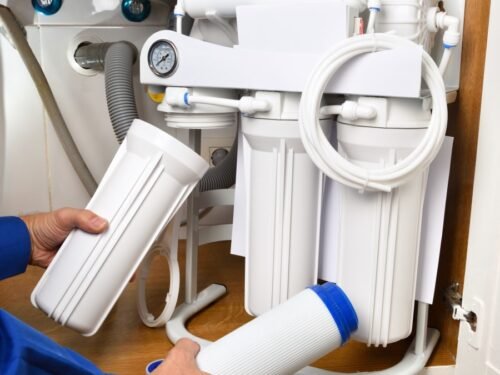
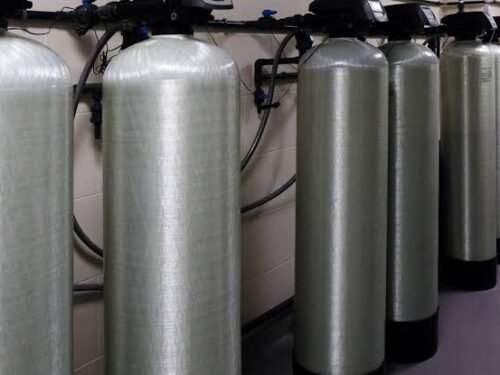
A properly selected whole home filtration system can provide treatment as water enters or moves through the property, depending on the system design. This can be useful when homeowners want to address certain water characteristics at multiple points rather than relying on separate filters at individual faucets.
The exact filtration method matters, though. Not every filter removes the same things. Some are designed primarily for sediment, others for chlorine or taste and odor, while specialized systems target particular contaminants.
That’s why a water test should come before equipment selection whenever possible.
Don’t Forget About Appliances
Your shower glass isn’t the only thing that can collect mineral deposits.
Dishwashers, washing machines, water heaters, coffee makers and other water-using appliances can also be affected by hard water. Scale may accumulate on internal components and heating surfaces, potentially increasing maintenance needs over time.
Water heaters deserve particular attention because mineral buildup can settle inside the tank. If you’ve noticed unusual noises or performance changes, it’s worth having the appliance checked rather than assuming it’s simply getting old.
Water treatment won’t make an old appliance new again, but reducing the conditions that contribute to scale may help protect water-using equipment.
Start With Testing, Not Guesswork
It’s tempting to order a treatment system after reading a few articles online. But water treatment is one area where assumptions can become expensive.
A water analysis can tell you much more than appearance alone. It can help identify hardness and other characteristics that influence which treatment technologies make sense.
For homeowners on private wells, regular testing is particularly important because groundwater conditions can vary over time.
Once you know what’s actually in the water, you can make a much more informed decision. Maybe you need softening. Maybe filtration is appropriate. Maybe a point-of-use drinking-water system makes more sense. Or perhaps the issue has nothing to do with treatment at all.
The Goal Is Easier Living
Good water treatment isn’t about turning your home into a science laboratory. It’s about solving practical problems.
If you’re tired of wiping mineral spots from the shower door, constantly dealing with dry-feeling skin, or worrying about scale inside appliances, finding the cause can make everyday maintenance easier.
And sometimes the solution is surprisingly straightforward.
Start by noticing the patterns. Test the water. Understand what the results mean. Then choose treatment based on the actual problem instead of buying equipment because someone says it’s the latest and greatest.
Water should be one of those background parts of home life that you rarely have to think about. When the right treatment is in place, that’s often exactly what happens. The glass stays cleaner, fixtures require less attention, showers feel better, and you can get on with your day.
Honestly, that’s the kind of improvement most homeowners are looking for—not something flashy, just water that works a little better.