A Smarter Approach to Managing Water Quality in Commercial Buildings

Water is easy to take for granted in a commercial setting. Employees turn on a faucet, customers order a drink, equipment runs in the background, and nobody really stops to think about what is happening inside the plumbing. Until, of course, something goes wrong.
Scale appears around fixtures. Glassware comes out cloudy. A strange taste creeps into drinking water. Equipment starts needing repairs more often than expected. In a hotel, restaurant, office, healthcare facility or manufacturing environment, these small issues can quickly become expensive ones.
That’s why choosing the right water treatment strategy is less about buying a piece of equipment and more about understanding how water affects the entire operation.
Every Business Has Different Water Needs
There is no universal commercial water-treatment setup. A restaurant may be especially concerned about water quality for cooking, beverages, dishwashing and ice machines. A hotel may need to protect showers, laundry equipment and hot-water systems. A manufacturing facility could have highly specific process-water requirements.
The first step is to identify where water is being used and what problems are occurring. A water-quality test can reveal hardness, sediment, dissolved minerals and other characteristics that may influence treatment decisions.
Flow rate matters, too. A system designed for a small office won’t necessarily cope with a busy commercial kitchen where multiple fixtures are running at once.
Why Commercial Water Treatment Requires Planning
In a residential property, a homeowner can usually adapt water use around a treatment system. Commercial operations don’t have that luxury. Businesses have schedules to maintain, customers to serve and equipment that can’t simply be switched off whenever treatment equipment needs attention.
A well-planned commercial water treatment strategy takes those realities into account. It considers incoming water quality, peak demand, equipment protection, maintenance requirements and the specific purpose of the treated water.
The goal isn’t necessarily to treat every drop in the same way. Sometimes different areas of a facility need different levels or types of treatment. That’s where thoughtful system design becomes much more valuable than simply choosing the biggest unit available.
Hard Water Can Cost More Than You Think
Hard water is a particularly common concern in commercial properties. Calcium and magnesium can form scale inside pipes, boilers, water heaters, dishwashers and other equipment.
At first, the problem might look harmless. A little white residue around a faucet doesn’t seem like a major business expense. But scale can accumulate over time, reducing efficiency and increasing the need for cleaning or maintenance.
In facilities that use large amounts of hot water, the issue can become even more noticeable. Heating scaled equipment may require more energy, while heavily affected components may have a shorter service life.
When Softening Makes Sense
Commercial softening systems are commonly used when hardness is interfering with operations. commercial water softeners can reduce hardness minerals through ion exchange, helping limit scale formation throughout the water system.
Sizing is especially important in a commercial environment. The system needs to handle expected water demand without creating unnecessary pressure loss or excessive regeneration cycles. That means looking at peak flow, daily consumption, water hardness and operating schedules.
Salt use and maintenance should also be considered. A system that works well technically but requires frequent attention during the busiest part of the workweek isn’t an ideal operational fit.
Reverse Osmosis for More Specialized Needs
Some businesses require water with significantly fewer dissolved substances than ordinary treated tap water provides.
Restaurants may use treated water for beverage preparation, coffee equipment or ice production. Certain manufacturing and laboratory processes may have even stricter requirements. In these situations, reverse osmosis can be an important part of the treatment strategy.
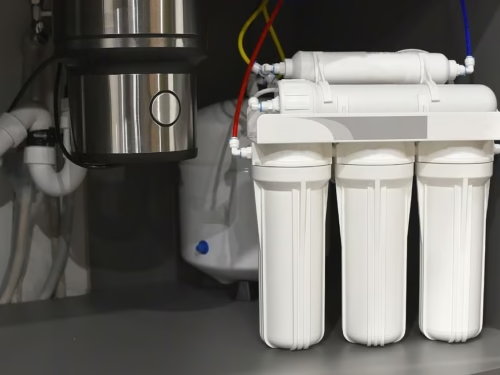
commercial ro systems use a semipermeable membrane to reduce many dissolved substances from water. They can produce highly treated water, but they also need proper pretreatment, adequate pressure and routine maintenance to perform as intended.
Reverse osmosis isn’t automatically better for every application. It’s a specialized technology, and using it where simpler filtration would work can add unnecessary cost and complexity.
Protect the Equipment That Keeps Business Moving
Water treatment often gets framed around drinking water, but equipment protection can be just as important.
Coffee machines, steamers, ice makers, boilers, cooling systems and commercial dishwashers all interact with water. Depending on the water chemistry, minerals and other substances can affect their performance.
Protecting these assets can help reduce unplanned downtime. And downtime is rarely cheap. A restaurant with a malfunctioning ice machine during a busy weekend doesn’t just have an equipment problem; it has an operational problem.
Treatment should therefore be considered part of broader equipment-maintenance planning.
Don’t Ignore Taste and Odor
Even when water is technically suitable for use, taste and odor can still affect a customer’s experience.
Think about a hotel guest taking the first sip of water from a room glass or a customer ordering coffee at a café. People notice things like that, even if they can’t explain exactly what seems different.
Carbon filtration and other targeted technologies can help with certain taste and odor concerns. The appropriate treatment depends on what is causing the issue, which is another reason testing should come before equipment selection.
Maintenance Should Be Built Into the Plan
Commercial water-treatment equipment needs regular attention. Filters must be changed, membranes inspected, tanks maintained and control settings checked.
Waiting for a system to fail is a poor maintenance strategy for any business. A treatment system should have a clear service schedule, and staff should know who is responsible for monitoring it.
It’s also wise to keep replacement components readily available, especially for facilities where water treatment is tied directly to production or customer service.
Think About Total Cost, Not Just Purchase Price
The cheapest system on an equipment quote isn’t necessarily the least expensive option.
Businesses should consider installation, electricity, water consumption, salt or chemical use where applicable, replacement filters, service visits and expected equipment life. A system that costs slightly more initially but operates efficiently and is easy to maintain may prove more economical over several years.
There’s also the cost of poor water quality itself—equipment repairs, lost productivity, inconsistent products and dissatisfied customers.
A Better Water Strategy Starts With the Business
Commercial water treatment works best when it’s designed around the operation rather than selected from a generic equipment list.
Start with the water. Understand the chemistry. Look at how much water the facility uses and when demand peaks. Identify which equipment is vulnerable and where treated water is actually necessary.
From there, the right combination of softening, filtration, reverse osmosis or other technologies becomes much easier to determine.
Good water treatment doesn’t have to be flashy. In fact, the best systems are often the ones nobody notices. They quietly protect equipment, support consistent operations and help businesses avoid problems before those problems turn into expensive surprises.
For a commercial property, that’s really what good water management is about: fewer disruptions, better performance and one less thing for the people running the business to worry about.