What Your Water Is Telling You: Understanding Common Water Quality Problems
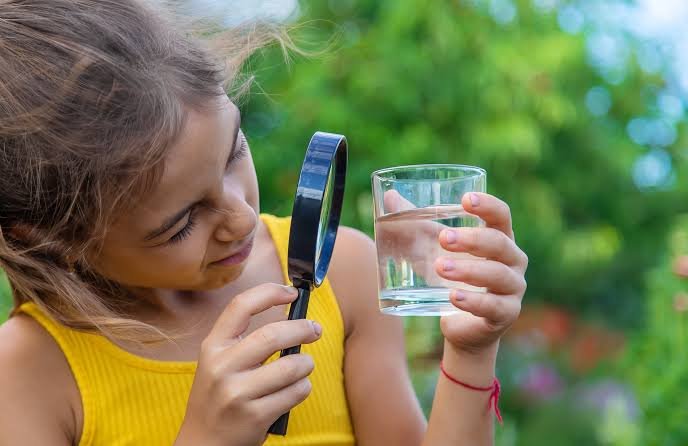
You usually know when something is wrong with the water in your home. Maybe the morning coffee tastes a little strange. Perhaps there’s an orange ring around the bathroom sink, or the water smells odd when you first turn on the shower. Sometimes the clues are subtle. Other times, they’re impossible to ignore.
The tricky part is figuring out what those signs actually mean.
Water quality problems don’t always come with obvious warning labels. Some substances can be present without changing the color, taste, or smell of the water at all. Others announce themselves immediately, leaving stains, odors, or an unpleasant aftertaste. Understanding the difference is the first step toward choosing a sensible treatment solution.
Not All Water Problems Look the Same
Water chemistry varies from one property to another. Municipal supplies, private wells, older plumbing and local geology can all influence what’s coming through the tap.
That’s why a neighbor’s solution may not necessarily work for your home. One household might struggle with hard water, while another has sediment or an unusual odor. Even two properties on the same street can have different plumbing conditions and water-quality concerns.
A proper water test is often more useful than trying to diagnose the problem by appearance alone. Testing can reveal information about minerals, acidity, contaminants and other characteristics that aren’t obvious from a glass of water.
It also helps prevent a common mistake: buying a treatment system based on a symptom while ignoring the underlying cause.
The Concern Around PFAS
Some water-quality conversations have become more complicated in recent years because of contaminants that aren’t easily detected by taste or appearance. One example is pfas (forever chemicals), a broad group of manufactured chemicals that have been used in various industrial and consumer applications.
PFAS are known for their persistence in the environment, which is where the “forever chemicals” nickname comes from. They can be found in some water sources, although the presence and concentration vary significantly by location.
If PFAS is a concern in your area, don’t rely on a general-purpose filter simply because its packaging uses phrases such as “advanced purification.” Look for treatment equipment that has been specifically tested or certified for the contaminant of concern.
Water testing is especially important here. If there is a known local concern, homeowners can use available public water-quality information alongside professional testing to make a more informed decision.
Why Iron Leaves Those Annoying Orange Stains
Few water problems are as visually obvious as iron. If you’ve ever noticed reddish-brown stains around a toilet, sink or bathtub, you may have encountered it.
iron & rust in household water can create staining and affect taste. Iron may occur naturally in groundwater, and it can also become associated with corrosion in certain plumbing systems. The exact source matters because treatment depends on the type and concentration of iron involved.
Some forms of iron remain dissolved until the water is exposed to air, while other forms arrive as visible particles. That difference affects the treatment approach.
Trying to scrub away stains without addressing the water itself can become a never-ending chore. If the staining keeps returning, testing the water is a much better place to start.
That Rotten-Egg Smell Has a Reason
Then there’s the smell. You turn on a faucet and suddenly the room smells like someone opened a carton of forgotten eggs.
The culprit is often hydrogen sulfide, which is associated with sulfur (rotten egg smell) in water. It can occur naturally, particularly in some well-water systems, and may also be related to conditions inside plumbing or water-heating equipment.
The smell can be stronger when hot water is running, which can sometimes provide a useful clue. If the odor appears only with hot water, the water heater deserves attention as part of the investigation.
Treatment varies depending on the concentration and source. Aeration, filtration and oxidation-based methods are among the approaches that may be considered. There isn’t a universal “sulfur filter” that works perfectly in every situation.
A Strange Taste Doesn’t Always Mean Unsafe Water
Taste is one of the first things people notice, but it’s not a reliable safety test.
Chlorine, dissolved minerals and certain naturally occurring substances can change the taste of water without necessarily indicating that the water is dangerous. On the other hand, water can contain contaminants that don’t affect taste at all.
That’s why “it tastes fine” shouldn’t be treated as proof that everything is fine.
Likewise, unpleasant taste doesn’t automatically mean you need the most expensive purification equipment available. A targeted solution may be enough once the cause has been identified.
Your Plumbing Can Be Part of the Story
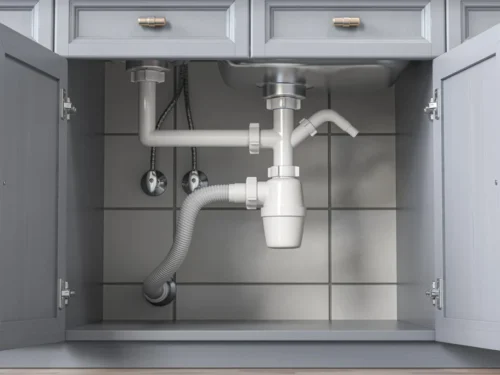
Water doesn’t travel directly from a treatment plant or well into your drinking glass. It moves through pipes, valves, fixtures and sometimes water heaters before reaching the tap.
Older plumbing can therefore influence water quality. Corrosion, sediment accumulation and deteriorating components may contribute to changes in appearance or taste.
If the problem occurs only at one faucet, for example, the issue may be localized rather than a whole-house water problem. If every tap shows the same symptoms, the source may be farther upstream.
Paying attention to where and when a problem occurs can give a professional valuable information.
Don’t Choose Equipment Before Understanding the Problem
Water treatment can involve carbon filters, sediment filtration, water softeners, reverse osmosis, UV treatment, oxidation systems and other technologies. Each has a particular purpose.
That variety is helpful, but it can also be confusing. A system that removes sediment won’t necessarily address dissolved contaminants. A softener is designed primarily around hardness, not every possible water-quality concern. A carbon filter can improve certain taste and odor issues but isn’t a universal solution.
Think of treatment like choosing a tool from a toolbox. You wouldn’t use a screwdriver to hammer a nail just because both happen to be sitting in the same box.
The same principle applies to water treatment: identify the problem first, then select the technology.
Testing Gives You a Better Starting Point
If your water has developed an unusual taste, smell or appearance, testing is a sensible first step. For private wells, routine testing can be particularly important because conditions can change over time.
A useful test should match the concern. If you’re worried about a specific contaminant, make sure the test actually measures it. A basic water test isn’t automatically a complete analysis of every possible substance.
Professional guidance can also help interpret the results. Numbers on a laboratory report don’t always tell the whole story to someone unfamiliar with water chemistry.
Better Water Treatment Is About the Right Fit
There’s no prize for having the most complicated filtration system in the neighborhood. What matters is whether the equipment addresses the actual problem and is maintained properly.
Start with the source. Look at the symptoms. Test when necessary. Then compare treatment options based on what the results show.
Sometimes the answer will be surprisingly simple. Other times, several treatment stages may be justified. Either way, an informed decision is better than guessing.
Water is something we interact with all day, every day. It deserves more attention than a quick glance at a glass. Once you learn to recognize the clues — the stain, the odor, the taste, even the timing of the problem — you’re in a much better position to understand what your home is telling you.
And that’s really the goal: not simply clearer water, but water treatment that makes sense for the people, plumbing and place it serves.